DIY Beauty Recipes for Beginners: Simple, Gentle, and Practical Ideas
Which DIY Beauty Recipes Are Easy for Beginners?
Good DIY beauty recipes for beginners are simple, freshly prepared mixtures made with a small number of mild ingredients. Good starting options include an oatmeal face mask, a yogurt-free clay mask mixed with water, a sugar body scrub, a basic hair oil blend, or a warm foot soak. Choose recipes according to your skin or hair needs, use clean tools, and make only enough for one application whenever possible. DIY beauty recipes may support cleansing, softness, hydration, or gentle exfoliation, but they should not replace professional care for persistent irritation, acne, hair loss, or other concerns.
Why Simple Homemade Beauty Recipes Are Better for First-Time Users
Homemade beauty care can quickly become complicated. Online recipes sometimes combine many ingredients without explaining why they are included, how long the mixture remains usable, or whether it is suitable for sensitive skin.
Beginners are usually better served by recipes containing two to four ingredients. A short ingredient list makes it easier to understand what each ingredient does and identify the cause if irritation occurs. It also reduces waste and makes preparation more manageable.
Simple recipes encourage realistic expectations. A homemade mask may leave the skin feeling softer for a short time, while a body scrub may smooth rough surface texture. These effects can be useful, but they are different from treating a medical condition or permanently changing the skin or hair.
How to Choose a DIY Beauty Recipe for Your Needs
Start by identifying one clear goal. Do you want to soften dry elbows, gently exfoliate the body, condition dry hair ends, or create a relaxing foot soak? Avoid choosing a recipe simply because it is popular or contains an ingredient that sounds impressive.
Consider Your Skin Type
Dry skin generally benefits from gentle, low-friction recipes containing ingredients such as finely ground oats or a small amount of plain oil. Oily skin may still need moisture, but heavy oil-based mixtures can feel uncomfortable for some people. Sensitive skin usually requires the fewest ingredients and the most careful patch testing.
Combination skin may need different care in different areas. For example, an oily forehead may not respond well to the same rich mixture used on dry cheeks. Applying a recipe only where it is needed can be more practical than covering the entire face.
Consider Your Hair and Scalp
Hair oils and conditioning mixtures are usually easier to manage on the mid-lengths and ends than directly on the scalp. Fine hair may feel weighed down by rich oils, while thick or textured hair may tolerate a slightly larger amount.
A dry-feeling scalp does not always need oil. Flaking, itching, redness, and product buildup can have different causes. When scalp discomfort continues, professional guidance is more useful than repeatedly trying homemade treatments.
Consider the Body Area
Facial skin is generally more delicate than the skin on the elbows, knees, feet, or hands. For those areas, a broader hand and nail care routine may be more useful than frequent scrubbing. A scrub that feels comfortable on the legs may be too abrasive for the face. Recipes should therefore be selected according to the area where they will be used.
DIY Beauty Recipe Comparison for Different Needs
| Recipe Type | Main Purpose | Suitable Area | Typical Use | Important Caution |
|---|---|---|---|---|
| Oatmeal mask | Gentle cleansing and a soft skin feel | Face or hands | Occasionally | Use finely ground oats and avoid rubbing |
| Sugar and oil scrub | Surface exfoliation | Hands, feet, elbows, or legs | Once a week or less | Do not use on irritated or broken skin |
| Simple hair oil | Softness and reduced dry feeling | Hair lengths and ends | Before washing as needed | Use a small amount to avoid buildup |
| Warm foot soak | Relaxation and softening | Feet | As needed | Water should be comfortably warm, not hot |
| Clay and water mask | Temporary oil absorption | Oily facial areas | Occasionally | Do not allow it to become painfully tight |
Five Simple DIY Beauty Recipes to Try
1. Gentle Oatmeal Face Mask
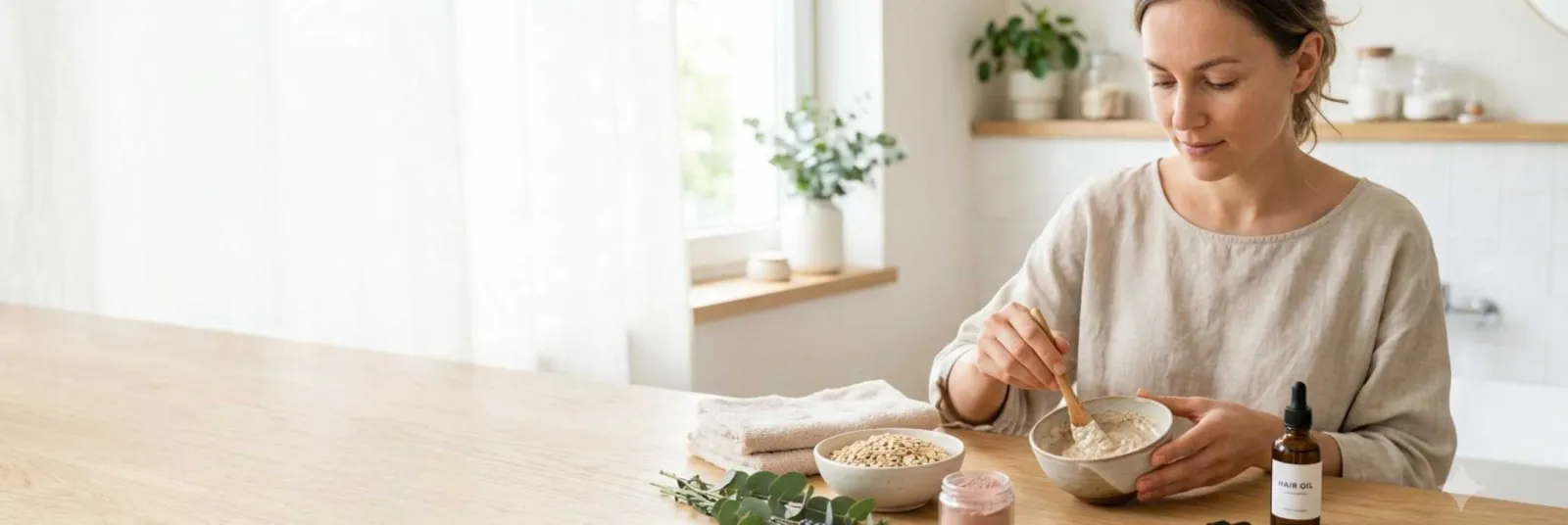
Finely ground oats are commonly used in simple skincare mixtures because they create a soft paste and provide very mild physical cleansing. This recipe may be suitable when the goal is a calm, comfortable skin feel rather than strong exfoliation.
- 1 tablespoon finely ground plain oats
- 1 to 2 tablespoons lukewarm water
Mix the ingredients in a clean bowl until a soft paste forms. Apply a thin layer to clean, damp skin without scrubbing. Leave it on for about five to ten minutes, then rinse gently with lukewarm water. Pat the skin dry with a clean towel.
2. Basic Sugar Body Scrub
A sugar scrub can help remove loose surface flakes from areas such as the hands, elbows, legs, and feet. It is not ideal for the face because the grains may feel too rough on delicate facial skin.
- 1 tablespoon fine sugar
- 1 tablespoon plain vegetable oil
Combine the ingredients immediately before use. Massage a small amount over damp, healthy skin with light pressure for less than a minute. Rinse thoroughly and take care because oil can make the shower or floor slippery.
3. Simple Pre-Wash Hair Oil
A small amount of oil may help dry hair lengths feel smoother and easier to manage. The correct amount depends on hair thickness, length, and personal preference.
- 1 to 2 teaspoons plain coconut, olive, or sunflower oil
Warm the oil between your palms rather than heating it directly. Smooth it over the mid-lengths and ends of dry hair. Leave it on for 15 to 30 minutes, then shampoo thoroughly. Fine hair may need only a few drops.
4. Relaxing Oat Foot Soak
A simple foot soak can soften dry-feeling skin before gentle towel drying or moisturizing. It can also be a comfortable part of an evening self-care routine.
- A basin of comfortably warm water
- 2 tablespoons finely ground oats placed in a clean cloth pouch
Place the oat pouch in the water and soak the feet for approximately ten minutes. Dry carefully, especially between the toes. Avoid soaking cuts, open blisters, or irritated skin.
5. Basic Clay Mask for Oily Areas
Plain cosmetic clay is often included in masks designed to absorb surface oil temporarily. It may be more suitable for oily areas than for dry or sensitive skin.
- 1 teaspoon cosmetic clay intended for facial use
- Enough water to form a smooth paste
Apply a thin layer to oily areas while avoiding the eyes and lips; delicate lip skin is better managed with a dedicated lip care routine. Rinse before the mask becomes extremely dry, cracked, or uncomfortable. Follow with a mild moisturizer if the skin feels tight.
How to Prepare Homemade Beauty Products Safely
Clean preparation matters because most homemade recipes do not contain tested preservation systems. Water, fresh foods, dirty fingers, and reused containers can introduce microorganisms into a mixture.
- Wash and dry your hands before preparing the recipe.
- Use a clean bowl, spoon, and application tool.
- Check that each ingredient looks and smells normal.
- Prepare only the amount needed for one use.
- Do not return unused mixture to the original ingredient container.
- Discard any recipe that changes in color, texture, or smell.
Single-use preparation is usually the simplest approach. Recipes containing water, milk, yogurt, fruit, vegetables, herbal teas, or other fresh ingredients can spoil quickly. Refrigeration does not make an unpreserved mixture safe indefinitely.
Why Patch Testing Is an Important First Step
Natural ingredients can still cause irritation or an allergic response. Before applying a new mixture widely, place a small amount on a limited area of healthy skin, such as the inner arm. Follow the same contact time you plan to use for the full application, rinse it off, and observe the area.
A patch test cannot guarantee that a product will never cause a reaction, but it may help identify obvious sensitivity. Stop using the mixture if you notice burning, significant itching, swelling, a spreading rash, or persistent redness.
Be particularly cautious when you have a history of allergies, eczema, highly reactive skin, or sensitivity to fragrances. In these cases, fewer ingredients are generally easier to evaluate.
Ingredients to Use Carefully in DIY Beauty Care
Some popular kitchen ingredients can be too irritating, unpredictable, or abrasive for routine beauty use. Their presence in food does not automatically make them suitable for direct application to the skin.
Lemon and Other Citrus Juices
Citrus juice is highly acidic and can sting or irritate the skin. It may also increase sensitivity when the treated area is exposed to sunlight. It is safer to leave citrus juice out of beginner skincare recipes.
Baking Soda
Baking soda is alkaline and may disturb the skin’s comfortable surface balance. It can leave some people feeling dry, tight, or irritated, especially when used on the face or scalp.
Undiluted Essential Oils
Essential oils are concentrated fragrant substances. Applying them directly can cause irritation or sensitization. They are not necessary for an effective beginner recipe, and avoiding them keeps formulas simpler.
Coarse Salt, Coffee Grounds, and Rough Particles
Coarse particles may create excessive friction, particularly on facial skin. Gentle pressure does not always prevent rough ingredients from scratching or irritating delicate areas.
Raw Eggs and Other Perishable Foods
Raw foods introduce hygiene and storage concerns without being essential to a useful beauty routine. Simpler, non-perishable ingredients are easier for beginners to handle safely.
Common DIY Beauty Recipe Mistakes to Avoid
- Using too many ingredients: Complex mixtures make it difficult to identify what caused irritation.
- Assuming natural means risk-free: Plants, foods, oils, and fragrances can still trigger sensitivity.
- Scrubbing too hard: Strong pressure can leave the skin red, sore, or uncomfortable.
- Applying body recipes to the face: Facial skin may not tolerate coarse scrubs or rich mixtures.
- Storing fresh mixtures for too long: Homemade products without appropriate preservation can spoil.
- Using recipes on damaged skin: Avoid cuts, sunburn, active irritation, and recently shaved areas.
- Trying several new recipes at once: Introduce one mixture at a time so you can observe your response.
- Expecting permanent changes: Most homemade recipes offer temporary cosmetic effects rather than dramatic results.
Checklist Before Trying a DIY Beauty Recipe
- Have I chosen one clear beauty goal?
- Is the recipe suitable for the face, body, hair, or scalp area where I plan to use it?
- Does it contain only a few familiar ingredients?
- Am I avoiding ingredients that previously caused sensitivity?
- Are my hands, tools, and container clean and dry?
- Have I prepared only enough for one application?
- Have I patch-tested the mixture when appropriate?
- Is my skin healthy, unbroken, and free from active irritation?
- Do I know how long to leave the recipe on?
- Am I prepared to rinse it off immediately if it feels uncomfortable?
How Often Should You Use Homemade Beauty Recipes?
Frequency depends on the recipe, the application area, and your individual response. More frequent use does not necessarily produce better results. Scrubs, clay masks, and other potentially drying recipes are generally best used occasionally rather than every day.
A gentle hair oil may be used when the ends feel dry, while a foot soak can be used as part of an occasional relaxation routine. Pay attention to how your skin and hair feel afterward. Increased dryness, redness, itching, breakouts, or buildup are signs that the recipe may be unsuitable or used too often.
Keep the rest of your routine consistent while testing something new. This makes it easier to decide whether the homemade recipe is genuinely useful for you.
When a DIY Recipe Is Not the Right Choice
Homemade beauty care is most appropriate for simple cosmetic goals such as temporary softness, light conditioning, or gentle surface exfoliation. It is not the best approach for unexplained rashes, painful acne, signs of infection, persistent scalp problems, sudden hair loss, severe cracking, or ongoing irritation.
Do not apply homemade mixtures over broken skin, burns, inflamed areas, or wounds. People with known allergies, chronic skin conditions, or highly sensitive skin may need more individualized guidance before experimenting with unfamiliar ingredients.
Disclaimer: These DIY beauty recipes are provided for general educational purposes and may not suit every skin or hair type. Stop using any mixture that causes discomfort, and seek qualified guidance for persistent, severe, or unexplained skin, scalp, or hair concerns.
Reminder: A good homemade beauty routine does not need to be complicated. Start with one mild recipe, prepare it fresh, use it gently, and judge it by comfort and practicality rather than dramatic promises.
Building a Sensible DIY Beauty Routine
DIY beauty recipes can be enjoyable, affordable, and easy to understand when they are kept simple. The most useful approach is to select a specific goal, choose a mild formula, patch-test when appropriate, and prepare only what you need.
Focus on basic habits rather than chasing instant transformation. Clean tools, gentle application, careful ingredient selection, and realistic expectations matter more than long ingredient lists. With a thoughtful approach, beginner-friendly homemade beauty care can complement a simple personal care routine without unnecessary risk or confusion.
Frequently Asked Questions
Can I use DIY beauty ideas every day?
Most homemade ideas do not need to be used daily. Scrubs and clay masks may become drying or irritating when overused. Begin occasionally, monitor how your skin or hair responds, and reduce use if you notice discomfort.
How long can I store a homemade beauty mixture?
Fresh mixtures are generally safest when prepared for immediate use and then discarded. Recipes containing water, fresh food, or herbal liquids can spoil even when refrigerated. Avoid storing them unless you have reliable formulation and preservation knowledge.
Are kitchen ingredients safe to use on the face?
Some mild ingredients may be suitable, but food safety and skin suitability are not the same. Citrus juice, baking soda, spices, coarse particles, and heavily fragranced ingredients can be irritating. Choose simple facial recipes and patch-test first.
What should I do if a homemade mask starts burning?
Rinse it off immediately with plenty of lukewarm water and stop using the recipe. Avoid applying additional active ingredients to the area. Seek professional advice if discomfort, swelling, blistering, or significant redness continues.
Can DIY beauty ideas replace a regular skincare routine?
They are better viewed as optional additions rather than complete replacements. A basic routine built around gentle cleansing, suitable moisturizing, and appropriate sun protection is generally more consistent and easier to manage than relying mainly on homemade mixtures.
Was this article helpful?
Share your feedback — select a reaction.
Are you satisfied with these answers?
If you'd like to ask something else, you can post your question here.
Comments (0)
Comments are reviewed before they appear.
Loading comments…
More Blogs
Hair Care Tips For Healthy Hair: Simple Everyday Routine
How to Choose the Right Beauty Products for Your Skin, Hair, and Routine

Men’s Fashion Guide: Essential Wardrobe Pieces For A Stylish Look
Natural Glow Tips For Face: Simple Beauty Habits For Everyday Skin