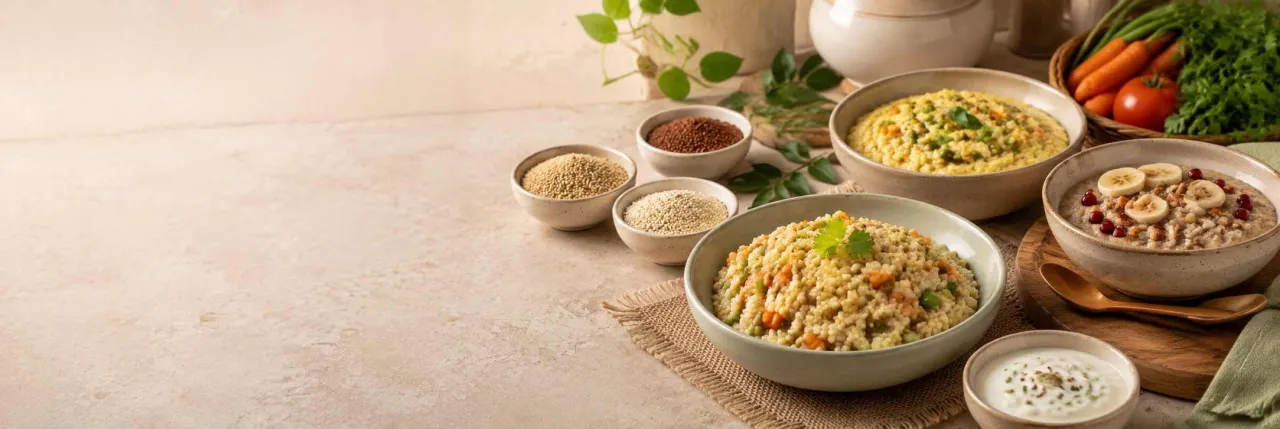
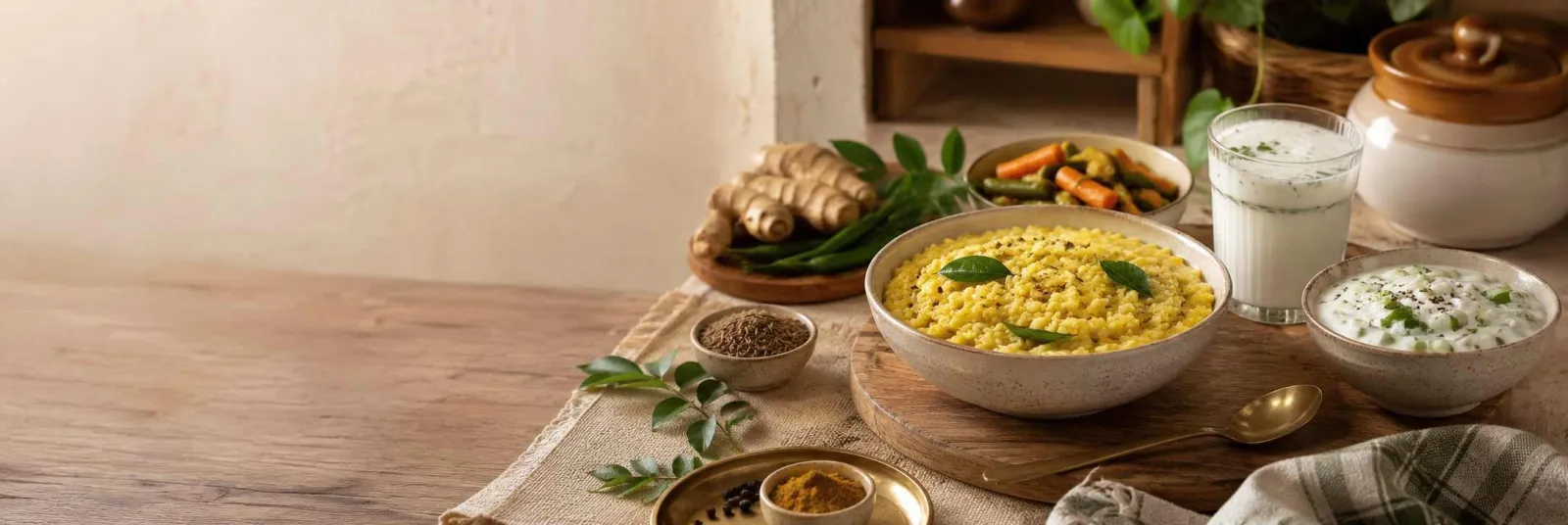
Gut-Friendly Indian Recipes Using Everyday Ingredients
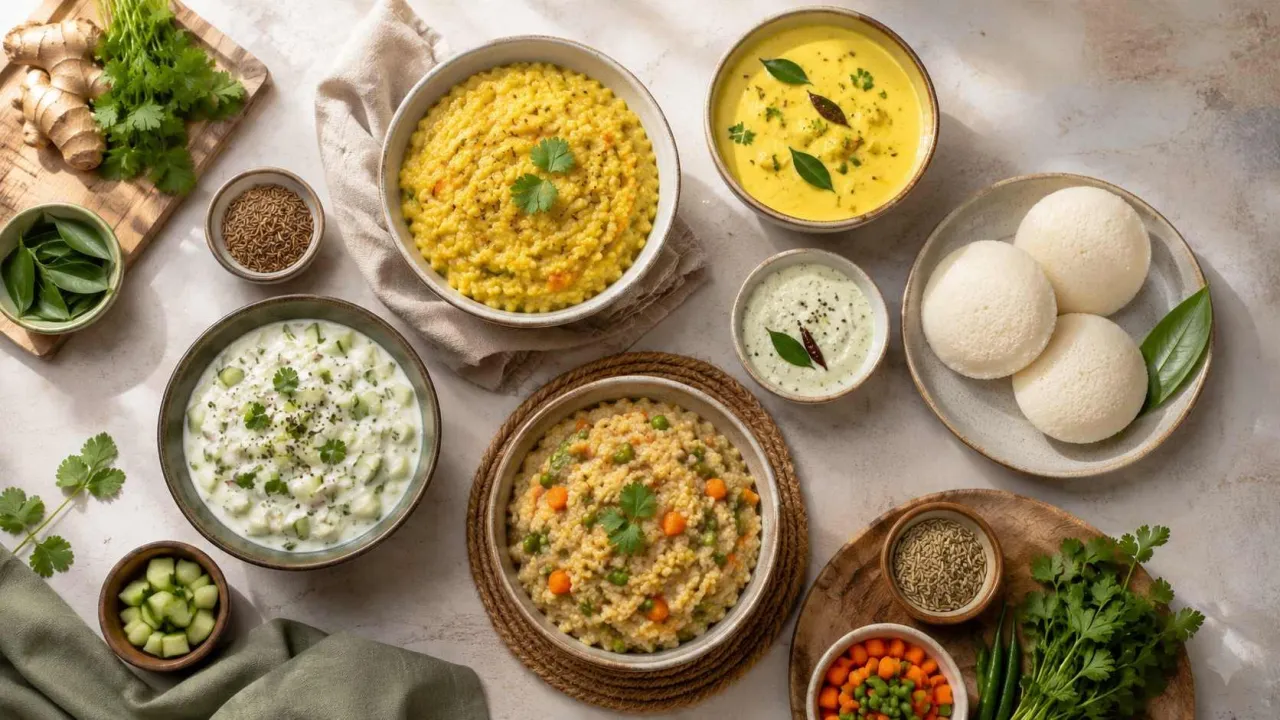
What Are Gut-Friendly Indian Recipes Using Everyday Ingredients?
Gut-friendly Indian recipes using everyday ingredients are simple home-style meals made with familiar foods that may feel lighter, balanced, and easier to include in a regular routine. These recipes often use ingredients such as dal, rice, curd, vegetables, khichdi, buttermilk, millets, cumin, ginger, ajwain, fennel, and soft-cooked foods. They are not about strict rules or complicated diets. Instead, they focus on thoughtful cooking methods, moderate spices, proper soaking, gentle textures, and balanced portions. For beginners, the best approach is to choose meals that suit personal comfort, taste, and daily schedule.
Why Everyday Indian Food Can Be Made More Gut-Friendly
Indian cooking already includes many ingredients that are commonly used in simple, comforting meals. Dal, rice, curd, vegetables, spices, and fermented batters are part of many homes. The difference is often in how these ingredients are prepared, combined, and portioned.
A meal can feel heavy when it is too oily, too spicy, too large, or not balanced with enough vegetables and fluids. The same meal can feel more comfortable when it is cooked softly, seasoned gently, and paired with fresh sides or curd. Small cooking choices can make everyday food feel easier and more practical.
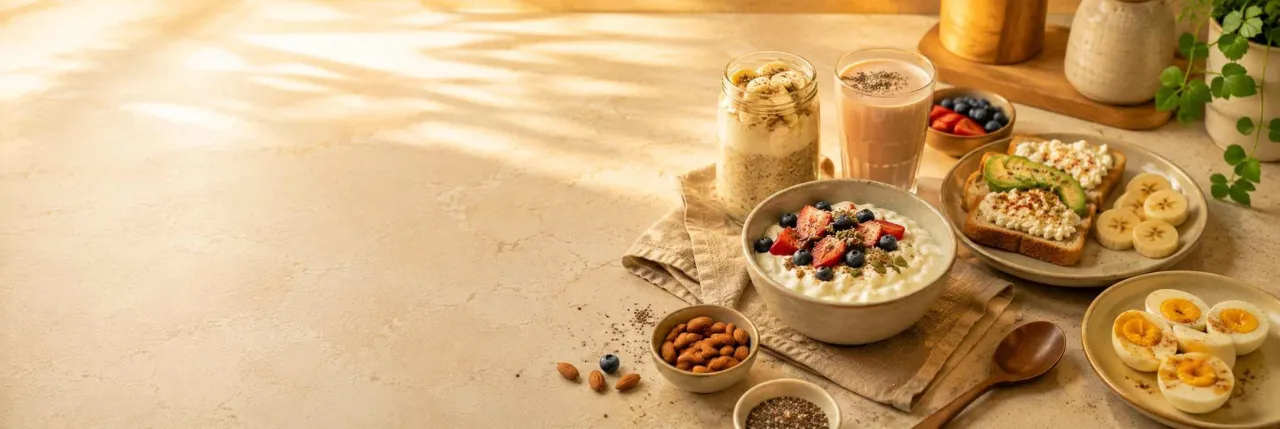
For readers planning their full day of meals, pairing these ideas with Easy High-Protein Breakfast Recipes for Busy Mornings can help create a more organized routine from breakfast onward.
What Makes an Indian Recipe Gut-Friendly?
A gut-friendly Indian recipe is usually simple, balanced, and easy to adjust. It does not need to be bland or boring. It simply avoids unnecessary heaviness and focuses on ingredients that are commonly used in home cooking.
For beginners, a useful way to think about gut-friendly cooking is to focus on four things: softness, balance, freshness, and moderation. Soft-cooked dal, rice, vegetables, khichdi, upma, curd rice, and idli-style meals are often easier to include in everyday menus than very rich, fried, or heavily spiced foods.
- Soft textures: khichdi, dal, steamed idli, curd rice, soft vegetables, and lightly cooked porridge-style meals.
- Balanced ingredients: grains, pulses, vegetables, curd, herbs, and gentle spices used in the right proportion.
- Simple seasoning: cumin, ginger, coriander, fennel, ajwain, turmeric, curry leaves, and black pepper in moderate amounts.
- Mindful cooking: soaking pulses, cooking thoroughly, using less oil, and avoiding too many heavy toppings.
Everyday Ingredients Commonly Used in Gut-Friendly Indian Recipes
You do not need rare ingredients to cook gut-friendly Indian meals. Many useful options are already found in regular kitchens. The goal is to use them thoughtfully and avoid overcomplicating the plate.
| Ingredient | How It Is Commonly Used | Beginner-Friendly Meal Idea |
|---|---|---|
| Moong dal | Soft dal, khichdi, cheela batter | Moong dal khichdi with vegetables |
| Rice | Curd rice, khichdi, soft rice bowls | Curd rice with cucumber and cumin tempering |
| Curd | Raita, kadhi, curd rice, buttermilk | Vegetable raita with soft roti |
| Ginger | Tea, dal, sabzi, soups, khichdi | Ginger-flavored vegetable dal |
| Cumin | Tempering, buttermilk, rice, dal | Jeera rice with dal and cooked vegetables |
| Vegetables | Sabzi, soups, khichdi, upma | Soft-cooked lauki, carrot, or pumpkin sabzi |
| Millets | Porridge, upma, khichdi, dosa batter | Millet vegetable upma |
Simple Gut-Friendly Indian Recipes for Beginners
The recipes below use familiar ingredients and simple cooking methods. They are not meant to be strict meal plans. You can adjust spices, texture, and portion size based on personal comfort and preference.
1. Soft Moong Dal Khichdi
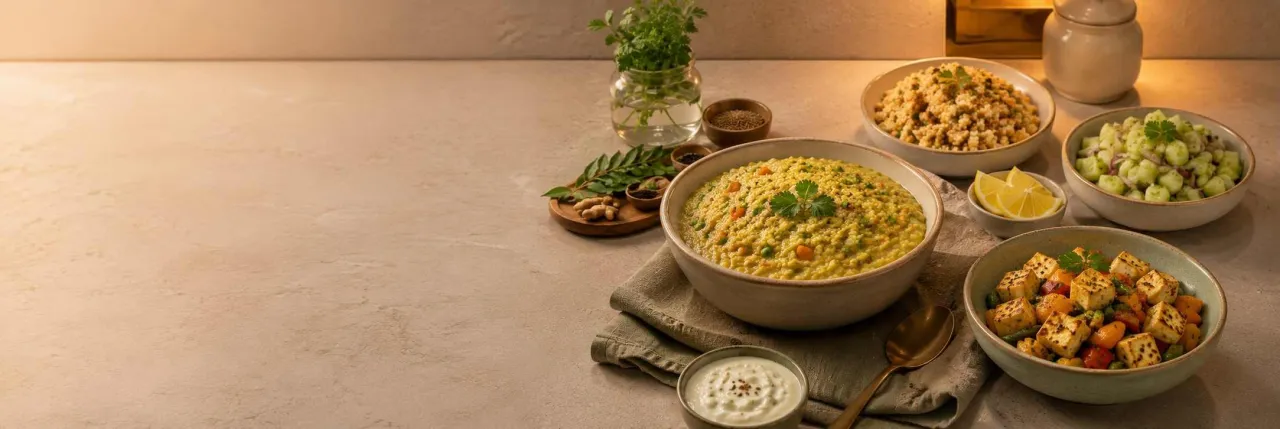
Moong dal khichdi is one of the most practical gut-friendly Indian recipes for beginners. It uses rice, split moong dal, turmeric, cumin, ginger, and soft vegetables such as carrot, lauki, pumpkin, or spinach. Cook everything together until soft and porridge-like.
Keep the seasoning gentle. A small tempering of ghee or oil with cumin and ginger can add flavor without making the dish too heavy. Serve it warm with curd or a simple vegetable side if it suits your routine.
2. Curd Rice with Cucumber and Cumin
Curd rice is simple, cooling in taste, and easy to prepare with leftover rice. Mix soft cooked rice with fresh curd and a little water if needed. Add grated cucumber, roasted cumin powder, and a mild tempering of mustard seeds, curry leaves, and a small amount of ginger.
This meal works well when you want something quick and familiar. Keep the curd fresh and avoid leaving dairy-based meals outside for too long, especially in warm weather.
3. Vegetable Dalia with Gentle Spices
Dalia, or broken wheat, can be cooked into a soft one-pot meal with vegetables. Use carrot, beans, peas, bottle gourd, or spinach. Add cumin, turmeric, ginger, and a little salt. Cook until the texture is soft and easy to eat.
Vegetable dalia is useful for breakfast, lunch, or a light dinner. It is also flexible because you can make it thicker like upma or softer like porridge depending on your preference.
4. Lauki Chana Dal with Soft Roti
Lauki and chana dal can make a simple home-style meal when cooked properly. Soak the dal before cooking, use chopped bottle gourd, turmeric, cumin, ginger, coriander powder, and a light tempering. Cook until the dal is soft and the lauki blends well into the dish.
This recipe is best when you want something more filling than plain dal but still familiar. Serve it with soft roti or rice, and keep the spice level moderate.
5. Idli with Coconut Chutney and Sambar
Steamed idli is a popular fermented Indian breakfast that can also work as a light meal. Pair it with sambar made with well-cooked dal and vegetables. Coconut chutney can be kept simple with coconut, roasted chana, ginger, and mild seasoning.
The key is balance. Avoid very oily chutneys or overly spicy sambar if you want the meal to feel gentler. Soft idlis with warm sambar can be a practical option for busy mornings or simple dinners.
6. Millet Vegetable Upma
Millet upma can be made with little millet, foxtail millet, or barnyard millet, depending on availability and preference. Cook it with vegetables, curry leaves, mustard seeds, cumin, ginger, and mild spices. Add enough water so the texture stays soft rather than dry.
For more ideas on using millets in everyday meals, you can explore Simple Millet Recipes for Weight-Conscious Eating. Millets can be useful for variety, but personal comfort and portion size still matter.
7. Vegetable Kadhi with Rice
Kadhi is made with curd and gram flour, then simmered with spices. A lighter version can include soft vegetables such as lauki, pumpkin, or spinach. Keep the tempering simple with cumin, mustard seeds, curry leaves, turmeric, and ginger.
Serve kadhi with rice for a comforting lunch. Make sure the curd is fresh and the kadhi is cooked well so the texture becomes smooth and balanced.
How to Make Indian Recipes Feel Lighter Without Losing Flavor
Many people think lighter food means plain food. That is not true. Indian recipes can still taste rich in aroma and flavor without becoming too heavy. The secret is to use spices carefully and avoid overloading the dish with oil, cream, deep-fried toppings, or too many strong ingredients at once.
Use ginger, cumin, coriander, fennel, curry leaves, mint, and lemon to build flavor. These ingredients are commonly used in Indian kitchens and can make simple meals more enjoyable. Flavor should support the meal, not overpower it.
Cooking method also matters. Steaming, boiling, pressure cooking, simmering, and light stir-frying are usually more suitable for everyday gut-friendly meals than frequent deep frying. Soft textures can also make meals feel more comforting, especially for beginners who want simple food choices.
How to Plan Gut-Friendly Indian Meals Through the Day
A simple daily routine can make food choices easier. You do not need to follow the same menu every day. Instead, keep a few dependable options for each meal.
- Breakfast: idli with sambar, vegetable dalia, poha with vegetables, curd bowl, or moong dal cheela.
- Lunch: khichdi, dal rice, curd rice, vegetable kadhi, or soft roti with cooked sabzi.
- Evening snack: buttermilk, fruit, roasted makhana, steamed chana, or a small bowl of curd with seeds.
- Dinner: light dal, vegetable soup, millet upma, soft khichdi, or rice with cooked vegetables.
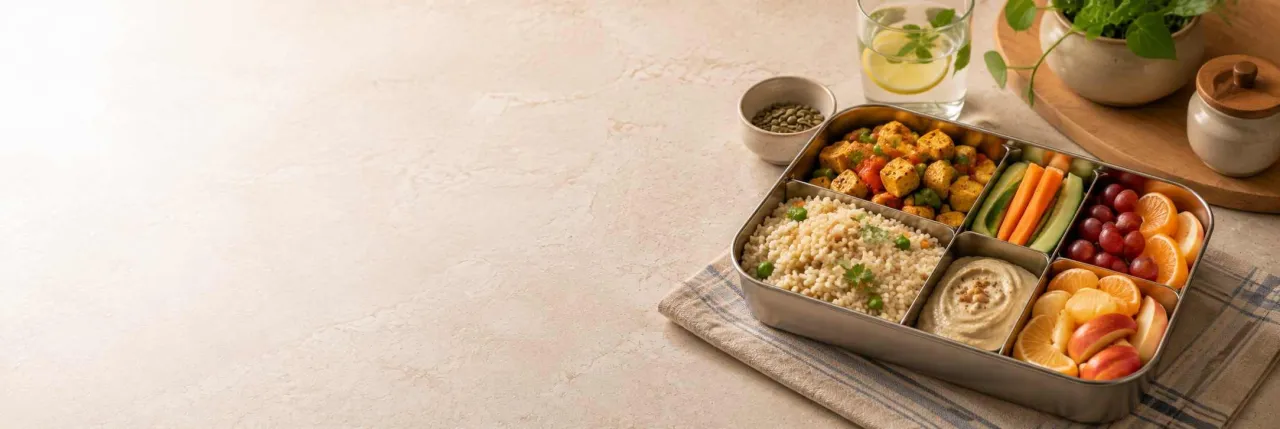
If you regularly carry food to work, school, or while travelling, Healthy lunch box ideas can help you turn these home-style meals into practical packed options.
For evening planning, Healthy dinner ideas for weight loss may also be useful if you want lighter dinner inspiration that still feels balanced and realistic.
Beginner-Friendly Meal Prep for Gut-Friendly Indian Cooking
Meal prep does not have to mean cooking everything in advance. For Indian food, it often works better to prepare small building blocks. This keeps meals fresh while reducing daily effort.
- Soak pulses early: Soak dals, chana, rajma, or other pulses as needed to reduce cooking time and improve texture.
- Chop soft-cooking vegetables: Keep lauki, carrot, pumpkin, beans, spinach, or cucumber ready for quick meals.
- Prepare basic spice mixes: Keep roasted cumin powder, coriander powder, and mild homemade masalas ready.
- Cook one base grain: Prepare rice, dalia, or millet in advance if it suits your weekly routine.
- Keep curd or buttermilk ready: Use fresh dairy carefully and store it properly.
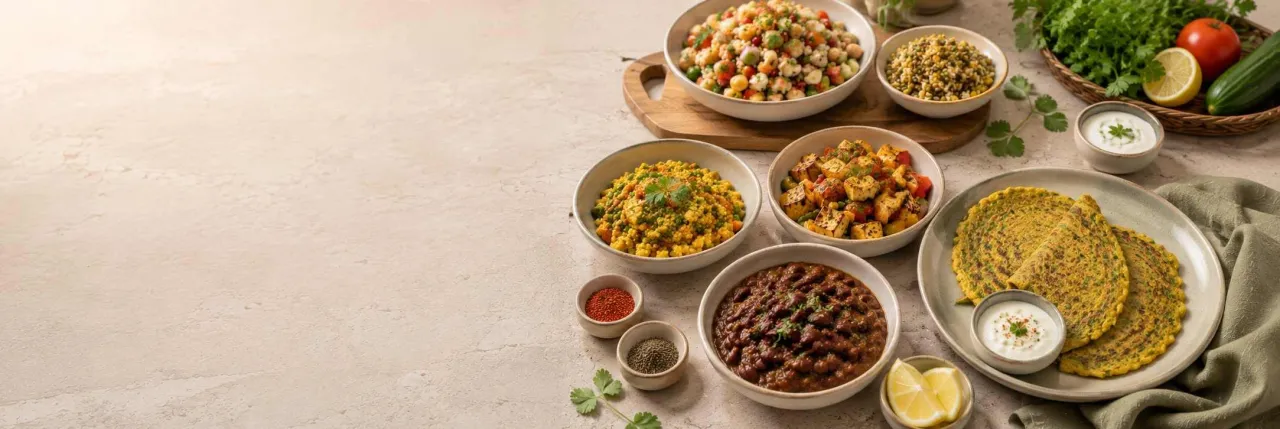
For a broader weekly routine, Easy Meal Prep Recipes for a Healthy Week can help you organize simple meals without making the process too complicated.
Common Mistakes to Avoid with Gut-Friendly Indian Recipes
One common mistake is assuming that all traditional food is automatically light. A dish can be home-cooked and still feel heavy if it uses too much oil, very strong spices, large portions, or too many fried sides.
Another mistake is changing too many ingredients at once. Beginners may suddenly add many seeds, millets, sprouts, fermented foods, and high-fiber ingredients in one meal. This may not suit everyone. Start slowly and observe what feels comfortable.
Some people also avoid seasoning completely, which can make meals boring. Simple spices such as cumin, ginger, coriander, fennel, and curry leaves can add aroma without making food too strong.
Skipping soaking and proper cooking is another issue. Pulses, beans, and certain grains often need enough soaking and cooking time. Undercooked ingredients can affect texture and comfort.
Finally, avoid copying someone else's meal exactly. Food comfort is personal. What feels light for one person may not feel the same for another. Your best gut-friendly recipe is the one that suits your body, taste, and routine.
Beginner-Friendly Checklist for Gut-Friendly Indian Recipes
- Choose simple recipes with familiar everyday ingredients.
- Use gentle cooking methods such as steaming, simmering, boiling, or pressure cooking.
- Soak dals, beans, and certain grains when needed.
- Cook pulses and vegetables until they are soft and easy to eat.
- Use spices in moderate amounts instead of making meals very strong.
- Add vegetables gradually if you are increasing fiber in your meals.
- Keep dairy-based foods fresh and stored safely.
- Balance grains, protein, vegetables, and flavor in one meal.
- Avoid very oily, fried, or overly rich versions for everyday meals.
- Adjust portion size based on hunger, comfort, and daily routine.
How to Choose the Right Recipe for Your Day
The right recipe depends on your schedule, appetite, and comfort level. If you want something quick, choose curd rice, vegetable dalia, poha, or a simple dal. If you want something more filling, choose khichdi, kadhi rice, lauki chana dal, or millet upma.
If you are cooking for family members, keep the base recipe mild and let people add extra chutney, spice, or pickle separately. This makes the meal easier to adjust for different preferences.
Also think about when you are eating. A heavy lunch may not suit a busy workday for everyone, while a very light dinner may not be satisfying for someone who had a long day. Personal preference matters, so use recipes as a guide rather than a strict rule.
Disclaimer: These gut-friendly Indian recipes are for general food and meal-planning guidance. Individual digestion, allergies, food tolerance, and health needs can vary, so adjust ingredients carefully and seek professional advice if you need personalized dietary guidance.
Reminder: Gut-friendly cooking does not require a complete change in your kitchen. Start with one or two simple recipes, use everyday ingredients wisely, and notice which meals feel comfortable, satisfying, and realistic for your routine.
Final Thoughts on Gut-Friendly Indian Recipes
Gut-friendly Indian recipes using everyday ingredients are easiest to follow when they are simple, familiar, and flexible. You can begin with soft khichdi, curd rice, vegetable dalia, millet upma, kadhi rice, idli sambar, or gentle dal-based meals. These dishes use ingredients many people already know, which makes them less intimidating for beginners.
The key is not to chase perfect food rules. Focus on balanced portions, soft cooking, moderate spices, fresh ingredients, and meals you actually enjoy. With small changes in preparation and planning, everyday Indian food can become more practical, comfortable, and suitable for your daily routine.
Frequently Asked Questions
What is the easiest gut-friendly Indian recipe for beginners?
Soft moong dal khichdi is one of the easiest options because it uses simple ingredients, cooks in one pot, and can be adjusted with mild spices and soft vegetables.
Can I make Indian food gut-friendly without making it bland?
Yes, you can use gentle spices such as cumin, ginger, coriander, fennel, curry leaves, and turmeric. The goal is to keep flavors balanced instead of making the meal very oily or overly spicy.
Are fermented Indian foods suitable for everyone?
Fermented foods such as idli, dosa batter, curd, and buttermilk are commonly included in Indian meals, but comfort can vary from person to person. Start with small portions and choose what suits you.
Which Indian meals are good for a light dinner?
Simple options include soft khichdi, vegetable dalia, dal with rice, millet upma, vegetable soup, kadhi rice, or lightly cooked sabzi with soft roti. Keep portions and spice levels comfortable.
How can I make dal easier to include in everyday meals?
Soak dal when needed, cook it until soft, use gentle spices, and pair it with rice, roti, vegetables, or curd. You can also rotate different dals to keep meals interesting.
Was this article helpful?
Share your feedback — select a reaction.
Are you satisfied with these answers?
If you'd like to ask something else, you can post your question here.
Comments (0)
Comments are reviewed before they appear.
Loading comments…